
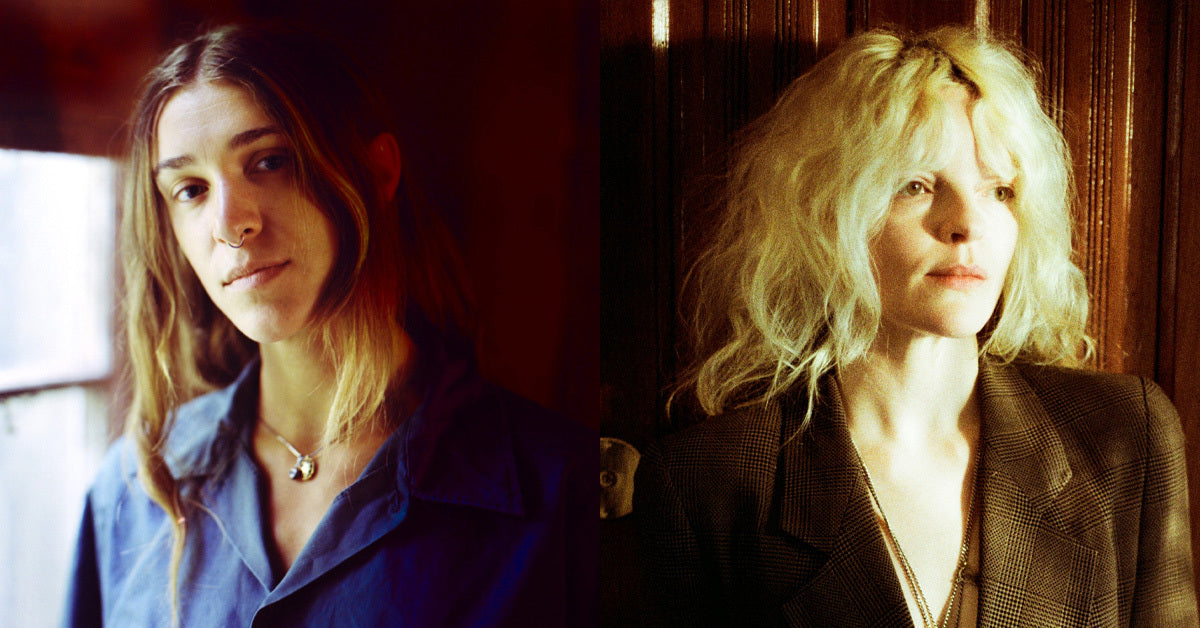
Raised by two musicians, Pittsburgh-native Merce Lemon has been involved in the city’s music scene for most of her life. She’s spent just as many nights with her neck craned up at a stage as in her childhood bedroom. Some of Lemon’s friends are double and triple her age, which isn’t surprising once you’ve heard her music. Lemon’s latest album, 2024’s Watch Me Drive Them Dogs Wild, marks a significant shift from her earlier, more whimsical work — as with 2020’s Moonth, which sparkles with playful idiosyncrasies.
Here, Lemon navigates grief, heartbreak, and life’s uncertainties, finding parallels in the natural world that holds her introspections. “Birdseed” opens the album, setting the tone for the following track, “Backyard Lover,” in which Lemon reflects on memories of love, loss, and a Pittsburgh home she remembers fondly. Nature remains a steadfast companion along the album’s descent, culminating in the title track where the listener finally meets the “Old man howling/Laughing his teeth out/With the dogs down the hill.”
Read more: The March album releases in alternative, rock, metal, and beyond
A melancholy runs underneath the singer’s voice, carrying a sadness that, once experienced, feels intrinsic. This resonance finds a parallel in fellow musician Jessica Pratt, whose bluesy vocals seem to drift somewhere apart from time. This month, Lemon will join Pratt on tour, beginning at Big Ears Festival in Knoxville, Tennessee. The two joined AltPress over Zoom to talk creative instincts, local scenes, and their shared attraction to melancholic things since childhood.

Mike Lawrie/Getty Images
JESSICA PRATT: Nice to see you! Where are you today?
MERCE LEMON: I’m in Pittsburgh. I just took the red-eye back from Seattle. I was there for a whirlwind of two days. My body’s confused as to what time it is.
PRATT: Pittsburgh to the West Coast, that’ll mess with you. It always does with me.
LEMON: I’m at least very engrossed in a book right now, so that helped with not sleeping much.
PRATT: Oh, I absolutely know how that is. During the pandemic, I was having a very hard time focusing on anything that felt too dense, so I started reading Stephen King novels. You can just blow through five of those in a day.
LEMON: It has the same fix that shitty TV does, with a little less guilt associated, at least for me. So, how do you come back to yourself after being on tour?
PRATT: Having a couple days where I’m just zoning out and allowing myself to rest. I’ve been watching a lot of House with Hugh Laurie. It’s pretty entertaining, but the formulaic nature of the show gets old. It was made during a time when people didn’t binge-watch television, with a week in between episodes.
LEMON: I actually grew up without cable. We had PBS, whatever channel Judge Judy was on, and one random channel that had Jackass, so I was really into Jackass as a 10-year-old.
PRATT: And that was through the entire course of your childhood?
LEMON: Yeah, until even those channels were gone. TV wasn’t really on my radar unless I went to my grandparents’ house.
PRATT: Weirdly, we pretty much always had cable, even though I grew up kind of poor. It was very important to my family. I watch so much TV, probably too much. So you’re in Pittsburgh. I’ve spent a little time there because my fiance lived there for 10 years prior to us being together. As a musician, what do you feel are the advantages of living in a city like Pittsburgh, as opposed to a music mecca, as in New York or Los Angeles?
LEMON: The scene here is small, but I grew up pretty much going to shows since I was less than a year old — probably at similar places that your fiance has frequented, DIY spots that no longer exist. It takes a little more work to create a scene here and to continue being active in it, whereas in bigger cities, there’s just so much. I like that there’s more space to be an artist and to do so many things beyond that.
PRATT: Yeah, I feel envious of that sometimes. I have friends that live in bigger cities, others in smaller cities, and that sense of space is really nice for the psyche. Your band also seems super dialed in and a vital crew of people. How did you meet them?
LEMON: I’m so grateful for them. I did an Instagram Story call out. Reid [Magette] responded about playing bass and then again about playing guitar. And it just felt right. Same with my bass player, Benji [Brody]. I’d known Pat [Coyle] from the scene. He’s an amazing drummer and an insanely talented singer. He does all of the harmonies from the drums. Sometimes, after shows people ask where the other voice came from.
PRATT: The Levon Helm man.
LEMON: I’m in awe of drummers that can keep a beat and a melody.
PRATT: I have no idea how they do it, and that’s why it’s so entertaining to watch. It’s remarkable that’s how it came together because your band seems so well suited to the music.
LEMON: Yeah, I think a huge part of playing in a band is how everyone gets along outside of playing the songs. I wanted people who enjoy spending time with each other, regardless of whether we’re playing shows or not. I had reached a point where I wasn’t having fun performing anymore and didn’t want to do this unless I found that feeling again. Have you ever had a moment like that?
PRATT: Absolutely. I mean, I certainly have an escapist instinct and can feel like I want to vanish or stop being a part of something on a dime, but I’d also never played in a band before this year. Putting together a band for these shows… I don’t know how I got so lucky, and it really makes a difference being surrounded by such special people. Do you feel like you recognize differences between the DIY scene you were around growing up and what it’s become?
LEMON: The scene I grew up in was a generation older than me, so I was around a lot of adults. When I started reintegrating myself into the scene after I got back from Seattle, I was 21 years old, and I was like, “How can I be an adult in the city where everyone has known me since they could hold me in their arms? How do I reestablish myself as an individual and an independent person from my parents?” Our lives were just so intertwined. I ended up playing a lot of college basements. I don’t think a college basement ever gets old.
PRATT: I’ve only played a couple of college shows, and they were always super fun.
LEMON: I didn’t go to college, so it always feels like I’m witnessing something I don’t totally understand.
PRATT: I too never went to college. Obviously, most people we know did go to college at least for a little while, and I feel like most say, “Ah, you don’t really need to do that.” But I am sometimes envious of the social camaraderie you experience during that time in your life.

Rebecca Sapp/Getty Images
LEMON: I’ve also wondered if I missed out on some kind of bonding I’ll never get, but I also feel very grateful because some of my closest friends I’ve had since I was a baby. What did you do instead of college?
PRATT: So I didn’t attend a public high school. I did a charter school, which is essentially homeschool, but it wasn’t even a traditional homeschool where you have a teacher. It was just me and textbooks doing the work, and then once a month the teacher would come and evaluate what I’d done.
LEMON: Was that for all of high school?
PRATT: I did four or five months of public high school, and then I started doing that. I really wasn’t enjoying high school, and then my best friend started meeting all of these music people while taking classes in community college, so I got indoctrinated into that scene. I got to skip a lot of awkward high school experiences and fast forward to being around people that I felt I had something in common with, and I’m grateful because I think if I would’ve stayed in high school, I’d be much more of a loner. That has its own strengths, but I’m glad it went the way that it did.
LEMON: I stuck it out for three years, and going into my senior year over the summer, I told my mom that there was no way I was going back. She was like, “Well, you should probably get your high school diploma… you’re so close.” I went to live with my uncle in Seattle and finished out my senior year in this program that let me go to community college for that last year of high school. I had a lot more freedom.
PRATT: Yeah, you’re treated more like an adult. It’s also another instance where you’re carving out your own identity, not attached to your previous.
LEMON: Were you playing music a lot in high school?
PRATT: I started writing and recording stuff when I was maybe 16, but I didn’t do it constantly. I wasn’t trying to really do anything with it other than show songs to friends because it seemed cool, and I liked the way it sounded. When I graduated high school, that changed.
LEMON: I related when you said that you were attracted to melancholic themes despite having a happy childhood in an interview I read. I wonder why, and maybe if for some people, sadness just feels intrinsic. We’ll always be attracted to that stuff, even if we’re not living a tragic existence.
PRATT: My fiance Matt and I sometimes talk about it. I can’t remember if he or I coined it, but it’s something that we often refer to as the “river of sorrow.” If you think about singers like Nick Drake, Arthur Russell, Nina Simone, people who, even if they sang a happy song, it would still carry this immense weight — their spirits are just super fucking heavy.
Sometimes when you’re writing, you might not feel sad or be consciously thinking about something sad, but maybe your subconscious process of writing is tapped into that river… When you can’t tap into it, that’s when you’re writing very unimpressive material. A lot of the best songs, even if they sound a little more optimistic, need that contrast to keep it interesting.
LEMON: I don’t know if a song can ever truly be called happy. No part of life is that simple and easy.
PRATT: I was just thinking of Harry Nilsson, who has this showman mentality, but you can just sense that there’s something else there. Or Robin Williams, who had this manic energy but obviously struggled with a lot of demons. A lot of the greats, it’s that contrast. Even Nico, in her latter years, singing “My Funny Valentine” or something, which is like, “Whoa, man, that’s fucking heavy.”
LEMON: I think that’s what moves me in music. I’m such a lyrical person, but a lot of the time, the songs that move me in a more emotional way are so much tied to the way that it’s sung. Even if the subject isn’t that morose, someone can take that and still bring in this sadness and weight to it.
PRATT: Yeah, absolutely.
How do you consume music these days?
LEMON: My partner and I don’t live in the same place, so I was just making a list of things to do and look forward to. One thing on that list is to listen to all my records one by one, maybe over a course of weeks, but mostly because a lot of them have come from my dad and Jim Lingo.
PRATT: I have a deep fondness for the time when I first moved to San Francisco as a teenager and really only listened to records in the house that I lived in. It was the point of every day and exciting, and it’s harder and harder to feel that way.
I don’t want to say that scarcity is the only thing that can make you value the stuff that you do have, but there’s something to being a teenager and saving up my money to buy a CD. I think it gets harder to do that when you’re just completely inundated with new things. Maybe that’s how everybody feels in whatever age they’re living, but it’d be interesting to look back on this time in 15 to 20 years.