
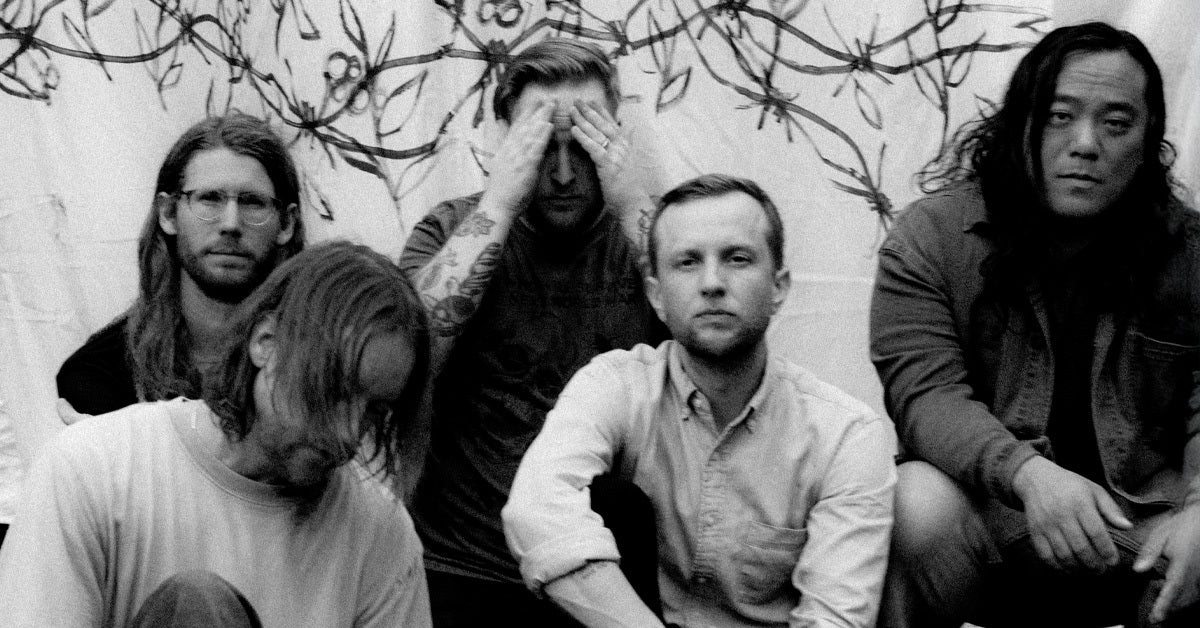
With over 20 years under their belt as a band, Michigan’s La Dispute have garnered a following, and reputation, as one of the scene’s most powerful forces. It’s been six years since their last release, Panorama, but the group haven’t sat in stasis — celebrating two anniversaries, of their albums Wildlife and Rooms of the House, respectively, and starting work on a brand-new project, No One Was Driving The Car, which arrived this month.
Side-stepping the tight confines of one genre, their idiosyncratic take on post-hardcore is a blur of spoken word, jazz, screamo, shoegaze — the one crystal-clear constant always being their intentionality and thoughtfulness, a throughline that permeates their LPs as much as their live shows. Lyricism and delivery work in lockstep. The emotionally driven tracks ebb and flow in intensity like organisms themselves, blood rushing, anxious hands trembling, embraced by guitar parts that swing from intermediate chaos before regaining a semblance of control. Observing the world we live in, the band spent the last few years residing in it, experiencing its collective fear, anger, and confusion, and now are offering us their reaction. And what they’ve given us, across each track, is a whole lot of pain — beautiful, intricate, both totally unbridled and carefully articulated.
Read more: Inside Balance and Composure’s long-awaited comeback shows
The album, in part, pulls from cinematic inspiration. Specifically, the 2017 psychological thriller First Reformed, which digs into environmental activism, the world’s end, and the unwinding of a community under spiritual and political despair. Vocalist Jordan Dreyer delivers some of his best vocals, inhuman screams that echo into the void of which he speaks — a tech-driven society, with its isolative, apocalyptic sheen. He grapples with a search for human connection, which is mirrored by the sonic backdrop, as the band forge their own journey, each armed with an instrument against the muck of what surrounds them. The strength to react with such pure vehemence doesn’t come easy, even to seasoned artists like these. “As much as I don’t enjoy the creative process because it’s taxing and often not fun, I also think it’s the most fun that I ever have,” Dreyer contemplates. “It’s the revelations you make, the breakthroughs. It’s banging your head against a wall and suddenly something clicks in a way that feels almost divine, like it came from somewhere else.”
When you went into the album process, did you know the topics or themes you wanted to tap into — existentialism, technology, the things the title itself digs into?
I spend time between records collecting stories, observations, fragments of conversation, etc., more or less passively, or at least without any predetermined creative intent. Certain things I see or hear in the course of the day register for one reason or another, then either leave or don’t over time. Whatever overarching theme or guiding principle becomes the underlying motivation for our eventual next project arrives by essentially lining up what has remained until some throughline clicks, but even that implies a deliberate process when it really isn’t, at least not to that point: I just compile information from my surroundings/environment until eventually I start to understand why.
Part two of that question is, can you expand on the album title choice, not just in the story behind it, but what that means to you and how you feel it fits the sound?
The title was one of those things, a quote in a news article I’d come across that just got stuck in my head, about two men dying in the backseat of a Tesla they’d mistakenly assumed would guide them safely around a cul-de-sac. I think the story — and how succinctly the quote summarized not only it but, to my mind, the state of things during the time I’d been logging ideas away, in my own world, and in the world at large, too — ended up unlocking the common thread connecting them, or that made them stay with me so long, which is essentially that life is volatile, we both do and do not control it, and that the majority of us, if not all of us entirely, seek comfort in the belief that something beyond our own means either helps guide the way ahead or steers forward on our behalf. There’s an uneasiness in both feeling that innately and contemplating it intentionally, and how intensely and frequently we felt it jumped pretty significantly during the time we spent building the album, from the title and some stories to the end of our time in the studio. The music reflects that whole period: from the first Trump term to COVID to now.
Structuring the album in “acts” — how did this cinematic approach develop, and how did it affect the process of making the album and what came out of it creatively?
We’ve often relied on other media for structural guidance, and I pitched this record with film in my mind. The five-act structure is a product of that. We consider our records as full pieces, and I’ve generally had some narrative structure or arc in mind, so we build a story map at the beginning, and use that as a dynamic guide sonically too. Generally speaking, everything has sort of woven together in a strand that circles back, and approaching this as five consecutive installments helped us utilize an old formula but with a new spin, which I think played a big role in how it turned out, and which ultimately I think it only did because we’re been this band together for so long.
How did First Reformed shape the tone of this album — what’s your relationship with that film? What happened the first time you saw it? And how do you feel like it shows up in the LP?
I saw it in the theater and then brought my mom to see it. Maybe my dad, too — can’t recall. I felt off the bat a connection to the subject matter because Paul Schrader is from our hometown and grew up in an earlier iteration of the reformed church that three of us were raised in. Beyond that, the general tone — specifically the dual specter of personal trauma and climate catastrophe — captures, to my mind, the best reflection of our current reality in contemporary art to date (of what I’ve seen or read or experienced). It was easy to connect to as a structural reference when I looked for one around which to pitch the idea to everyone, which is ultimately the role it played, but it was mostly just that, and early on.
Over the last six years, a lot can change and shift. What has changed in your music or approach, and where has it remained the same? What’s the throughline of La Dispute?
Obvious answer, but the most truthful and accurate one: Our throughline is each other, and I think that above all shows up on the record. We know more about who we are and about what we love, about how we feel, and how best to process and express it together. It’s both what’s changed and what’s stayed the same. We’re just getting better at it. And we know how to protect what we love about it, so we’re just going to keep following that directive until it doesn’t work, if it ever doesn’t work.
Did you draw on any musical references during this album process?
There wasn’t much on my mind music-wise during the writing/recording process and tends not to be (at least not directly), which is not to say there aren’t artists who impact my or our style or approach so much as the ones that do are integrated in the process now and don’t really enter the conversations or process deliberately. The musicians in the band may have had some specific artist or album or song influences in mind for their individual contributions, but I suspect it’s fairly similar for them, too. I just don’t think we think that way when writing. There’s Radiohead in places, Fugazi, Swans, late-’90s/early 2000s screamo, probably the National, a bunch of other shit, but that’s all stuff that has at this point been around for various members a long time now, and we never really direct ourselves to any specific thing for songs or records. We talked about film a lot for this record, though. So here are five non-Schrader movies we chose to watch during writing and recording:
Stalker, dir. Andrei Tartakovsky
The House that Jack Built, dir. Lars Von Trier
Crash, dir. David Cronenberg
Rap World, dir. by Conner O’Malley / Danny Scharar
The Target Shoots First, dir. Chris Wilcha