
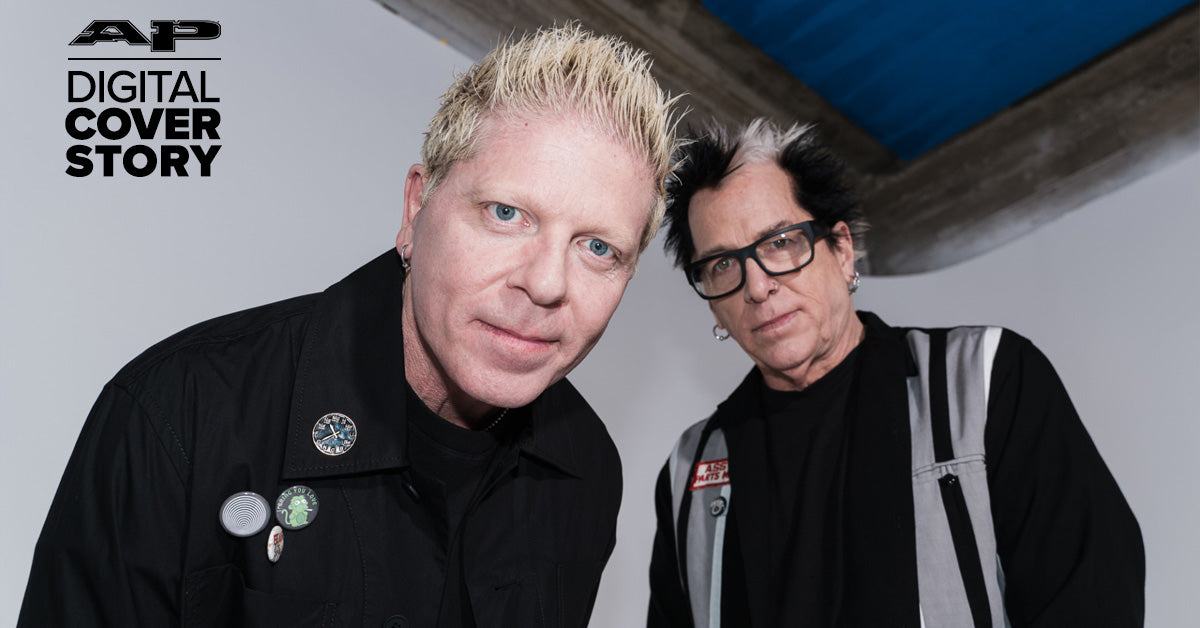
In the spring of 1994, the Offspring were in a challenging spot. The Orange County four-piece had just released their third studio album, Smash, which was flying off the shelves, but it did little for the community that initially lifted them up. In fact, it had the reverse effect. “We were hated by the punks when Smash came out for merely being a successful punk band,” founding guitarist Kevin “Noodles” Wasserman recalls, three decades on from its inception. “We didn’t make that record any differently than we made the records before, really. We always wanted to do the songs in melody, like the Ramones, the Adolescents, and Social Distortion.” Whether in the immortal lines of “You gotta keep ’em separated” or the nonstop MTV play of “Self Esteem,” the Offspring were everywhere, following in the footsteps of Nirvana and Green Day. It was impossible to predict just how much Smash would connect with the public, ultimately becoming the best-selling album on an indie to this day. Going triple platinum before the end of the year, the LP lived up to its name so much that Noodles quit his day job as a school janitor, and the band made the leap to a major label.
As the decades passed, the Offspring have only grown in stature. You can hear their influence everywhere — in the melodic tunefulness of Rise Against, the skate-punk angst of early Sum 41, and the bouncy hooks of Militarie Gun. That extends to Morgan Freed, the co-founder of Emo Nite, a nightlife franchise as much as a communal hangout celebrating the music that soundtracked his own coming of age as well as give space to a new generation of fans still finding meaning in outsiderism. “We fell into a genre of music that continuously speaks to growing up,” he tells the band. “[For] the fans that have been coming to your shows for so long, it means something different to them… There are always going to be those kids looking for a place to fit in — and I think the Offspring has done an incredible job of [that].”
Read more: 10 most criminally underrated Green Day songs
The punk veterans are only going harder these days, as they gear up to release their 11th studio album, Supercharged, this Friday, taking everything about their springy punk formula and doubling down. There are speedy juggernauts (“Light It Up”), odes to loved ones (“Make It All Right”), and the weirdo experiments that occur within every Offspring album (“Come to Brazil”) — and so much more. In conversation with Freed, the band look back on their Smash years, the making of their new LP, and being saved by punk rock.

Jordan Edwards
MORGAN FREED: I want to talk about the new album. We are with Dexter and Noodles from the Offspring, and Supercharged is out Oct. 11 there. It’s great. This is going to sound pretty damn stupid, but the cool thing about the album is — it sounds like an Offspring album. Which yes, it is, but at a time when there’s so much stuff, it’s nice to have a good, familiar feeling.
NOODLES: Well, thank you very much. We just wanted to do a record first of all, but if it started to sound like something we could have done 30 years ago, that’s the song. Let’s leave it alone. Then we always try to take our music in slightly different directions, but still keep it powerful and energetic.
DEXTER HOLLAND: Yeah, I mean it’s as intended. There’s some records where I felt like we needed to push the boundaries of what we were going to sound like. Ixnay was one of those after Smash. We had to do something to push things a little bit, but this didn’t feel like that kind of time. It felt like the time to be comfortable and be our band and not think about it too much and get the record out.
FREED: What kind of band do you guys consider the Offspring to be? The only reason I ask is because it feels like you started in a “scene.” But as we grow up, we discover more things and go, “Hey, I think that I’d like that thing to be a little bit a part of me, and I think that I can do that thing pretty OK. Why can’t I have a little pop in my punk — and why can’t I have a little bit of this in that?” Because in my opinion, the Offspring is a multigenre band.
NOODLES: I’ve never thought of it like that — multigenre. We do always talk about being a punk band. That’s where we came from. But we always say we’re not limited to being a punk band. Back in the day when we released Dirty Magic on Ignition, our second record, I remember friends going, “That song’s not punk. It’s a slow song. How can you release [that]?” We went, “It’s a great song. If it’s on the record, we’re putting it out.” Our heart lies with the punk-rock scene and punk-rock bands — the punk bands that inspired us to do what we do — but we also love other music as well. It was just punk that made us really fired up about music.

Jordan Edwards
FREED: I grew up in emo and hardcore — and in those scenes, sometimes people didn’t mix. Did you ever face any adversity from the OG punk guys?
NOODLES: Well, we were hated by the punks when Smash came out for merely being a successful punk band. We didn’t make that record any differently than we made the records before, really. But even before then, the first few years that we were a band, the first punk wave had died out, and it was just mostly hardcore, real percussive, angry heavy music, but not a lot of songs or melody in it. We always wanted to do the songs in melody, like the Ramones, the Adolescents, Social Distortion, some of those bands. Once Smash came out, though, the punks hated us. Well, not the old punks that had been around. They were kind of like, “Oh cool. Finally music that I like is getting the recognition it deserves.” But the new kids that were punk, they were the ones [like], “This isn’t my little sister’s music or the jocks’ music. This is my music.” And they wanted to keep that all to themselves. Alas, there is that.
HOLLAND: We heard this great story from the singer from Final Conflict, Ron [Martinez]. He worked at a record store, and he said, “Dude, these kids that looked way too normal would come into my record store, but they’d be asking for Offspring. I’d sell ’em Smash. Then they would come back three months later, and they’d say, “Now I want to hear NOFX and Pennywise.” They would go a little deeper, and they’d buy those records, and then he’d see ’em six months later, and they’re dressed totally different, and they’re buying Crass records and MDC and telling you that they hate the Offspring.
FREED:MORGAN: You guys were the gateway drug.
NOODLES: Yeah. By the way, Ron plays in a local band called Lower Class Brats, and they’re pretty good.
FREED: Have you ever written anything where you felt, “Oh, this is too far out of pocket. This does not fit on any album, but we love it.”
NOODLES: I think “We Never Have Sex Anymore” off the last record [Let the Bad Times Roll], but we have a song like that on almost every record. Something that’s kind of out there — except for this one. The weirdest song is probably “Come to Brazil” on Supercharged. The most different for us, anyways.
HOLLAND: I think we just learned a long time ago not to think about where the song’s going necessarily. We just get the song out, put it down, and then we can look at it later like a jigsaw puzzle, which one does not belong or in terms of putting an actual album together. In terms of a song, we just let it roll no matter what it is. We recorded something on this record that we didn’t use, but it’s actually a computer changed my voice into a female voice.
NOODLES: I fucking love this song, but I dunno what we’re going to do with this one.
FREED: Yeah, we’re living in a very strange time when that’s not that hard. You could put this album out and have the entire thing become a female voice. It’s really wild.
NOODLES: Not just any female voice, either. We can probably have Dexter’s voice changed to Christina Aguilera’s voice or something. Make Dexter sound like boygenius. AI will make it work somehow.
FREED: Has there been anybody that you have ever met where you just freeze up?
NOODLES: Oh yeah, I could think of two off the top. Iggy Pop and Joey Ramone — at Roseland Ballroom in New York City. I couldn’t think of anything to say. I kept thinking, “This is Joey Ramone. This is Joey Ramone.”
HOLLAND: Ramones, for sure. I felt a little tongue-tied around John Densmore.
FREED: One of the things that attracted me to you in the first place is that it seems that the Offspring always had the undertones of comedy — and I got that from “Come to Brazil.” It could probably cause a riot when you go down there with the outro.
NOODLES: We’ve done the ole la thing down in South America and parts of Europe as well. It goes over great. With the whole rest of the song added to it, it’ll be interesting to see how it goes over.

Jordan Edwards
FREED: When “Come Out and Play” came out, the landscape looked a lot different. It went to radio and MTV at the time. What are the hopes for Supercharged, given how we ingest music today?
NOODLES: 1 billion streams. That’s what we’re going for now. Extreme. It used to be gold and platinum records back when Smash came out, although we didn’t dare hope for either of those when we put Smash out because punk bands just didn’t do that. The closest thing to what we were doing music-wise was Nirvana a couple of years before they obliterated the walls around popular rock music. They called it rungs. They couldn’t call it punk, and it did change a little bit, become a little bit more radio-friendly after Nirvana I thought. Then all of a sudden punk bands like us started to get played on radio, but nowadays, nobody sells records. It’s just a measuring different metric. We did just get a billion streams on “You’re Gonna Go Far, Kid.” That’s what we’re looking at now. What kind of streams are we going to get off this record?
HOLLAND: Yeah, exactly. How do you even gauge it now? There is a sales chart that doesn’t mean anything. People debate how much radio matters. Our label reports to us in terms of what it calls consumption. The point is, you can’t really measure it.
NOODLES: When we take these songs out and play ’em live, both the songs “Make It All Right” and “Light It Up” have connected immediately with the audience. They fit right into the rest of the set. A lot of times you’ll try out something new, even something that’s been released for a while, and it doesn’t get the audience moving — they’re not singing along it. It’s a lull in the set. You can feel it with these two songs already, man — it’s just right up in there. It’s a good moment in the set. So that’s when you know your songs are connecting.
FREED: That’s what I meant when I said that this sounds like an Offspring album. It feels like it’s going to do really well with your already humongous audience — and also reach an external audience and a new generation.
NOODLES: I got to say, we’ve been doing this for 30 years now. Our audience has never aged. Our audience is all the same as it was 30 years ago, same age as it was 30 years ago when Smash came out. We’ve been able to win over new fans throughout our career, whether it’s the new stuff that we’re doing like this or all the records we’ve done or just they’re coming back — they heard some of the older stuff and love it. We’ve always had a young audience, and that’s great. We feed off that energy. We really do. That kind of stuff helps keep us young. We’re trying to keep up match that energy, and it’s a symbiotic thin — putting smiles on their faces, commiserating with them, making them feel sad or angry or happy. We feed on all of that. It’s an amazing thing that we get to do this still 30 years later.

Jordan Edwards
HOLLAND: You said career one of these days. I hate using that word — the C word, too.
NOODLES: Air quotes!
HOLLAND: I know what you mean. I feel like we’d go out, and the kids are still 14 years old in the front row, and I know they weren’t there last time because they would’ve been 8 or whatever. So there does seem to be this age group that keeps on popping up that’s listening to us, which is great. We still have a lot of the people as they get older, we see them there as well. It’s become generational almost.
FREED: Look man, there’s a reason why I started something called Emo Nite. We have this feeling when we’re 14, 15 that they’re always going to be 14-, 15-year-olds, and they’re always going to look for something that speaks to them. We fell into a genre of music that continuously speaks to coming of age and growing up. Also, the fans that have been coming to your guys’ shows for so long, it means something different to them. These things grow and change over time, but there’s always going to be those kids that are looking for a place to fit in. And I think the Offspring has done an incredible job of [that].
NOODLES: I think that’s why some of the younger fans can relate. We have a song on this record called “You Can’t Get There From Here,” which is about the voice of self-doubt in the back of your head and personifies that voice as just a real evil character. But we all have those voices of self-doubt, especially when you’re a teenager and trying to find your way in this world. But that’s why we glommed on to punk rock for the same thing. We didn’t feel so alone in these self-doubts, fears, or struggles that we have in life. Feeling disenfranchised when you’re your parents and teachers and the world around you is just giving you a tough time. Punk rock helped us navigate that. So I understand where kids get into emo music. It’s the same thing. It gives you a community. You’re not so alone.
HOLLAND: We come along in someone’s musical progression — somewhere after Bluey and right before Tame Impala.
FREED: Punk rock was a community, emo was a community, and we had to find it. I remember I had to go to a lot of shows, and I had to go to parties and find the people that I fit in with because the internet was very new. I was of the generation where we did not have computers, and then we had computers in high school. So it was a really strange place to be for me. Now you don’t have to. We were best friends with our next-door neighbors when I was growing up.
NOODLES: For sure. We have fans from all around the world that we’re actually friends with now — Hungary, Brazil, Netherlands, let alone the other states in this country. It’s amazing how the internet has changed that. The world is certainly much smaller than it was before. That’s a positive thing of social media. There are some certain downfalls, too, but I think one of the best things about the internet and social media is the real connections that can be made.
FREED: Is there anything else that you want talk about Supercharged before I go fucking nuts on some other shit?
HOLLAND: Very stoked about it. We’re going to get it out, and we’re setting up a bunch of touring next year. We’re going to try to hit everywhere in one year worldwide in ’25. That’s the plan.
MORGAN: Look, it is a great record. You have written some songs that everybody that I know, including my parents, even if they don’t know who you are, will know until the day that we die. But let’s add some context. What came before, or after? Did you go to school?
NOODLES: I worked at the school, man. For 13 years, I was the janitor at the same high school — and Dexter was the valedictorian.
HOLLAND: They call that educational adjacent.
NOODLES: Words? I don’t know. You’re the word guy. I was a night custodian just cleaning up after everybody left. Then I was a head custodian for seven years at an elementary school, and I wore all kinds of hats at that job.

Jordan Edwards
FREED: Well, I could do 45 minutes on that alone, but I’m not going to. It’s clear both of you are really smart guys. And Dexter, you are writing these songs, massive hits — but did you know how to write songs before you started this? Is there something that you put together as a formula where you’re like, “Damn, I got this”?
HOLLAND: I have a secret equation. A secret formula, yes.
FREED: Is it verse chorus, verse chorus, outro?
HOLLAND: Something like that. My parents listen to music all the time. Growing up, I bought records from the time I was 5 years old. My first record was the Jackson 5. I spent my life listening to music. So in a way, that was my education, really. I heard great songwriting my whole life by the records that we loved and listened to, and my mom liked a different kind of music from my sister. It was different from my older brother, and I got really exposed to a little bit of everything.
FREED: It’s funny you say that. That’s how I learned how to read — from Michael Jackson. I just would follow along in the tape. I’d open the package of the tape and just read along to what he was saying. You also celebrated your 40th anniversary this year?
NOODLES: We’ve been playing 40 years. It’s been 30 years since anyone gave a damn. But you know what I just want to touch on? You’ve been talking about how you learned how to read to Michael Jackson. We’ve taught a lot of people how to count to six in Spanish! Is it six?
NOODLES: Yeah, my best friend growing up spoke Spanish. My grandmother was Mexican, so my dad spoke Spanish around the house. But I can only know the bad words.
FREED: Same for me. I stopped growing or learning, thought I’d figured out everything. I was like, “This is who I am at 15, 16.” And I still feel like that kid! Even though I’m very far away from that. Do you guys ever feel like that?
NOODLES: I definitely do when we’re onstage. It brings back the love of music, the reason why I wanted to play this music in the first place. I definitely feel that.
HOLLAND: It’s like time stopped in 1994, right? Yeah, not exactly. It is always funny when people go, “So you still do shows and stuff?” And I’m like, “Yeah, we’re on the road six months out of the year, and we very much live with the old songs.” It’s very much part of our daily routine now, which is interesting. I’m joking when I say time stopped in 1994, but the old stuff is still a part of us on a daily basis, and I think that it does keep us young — I guess young at heart.
FREED: I’m not lying when I say the same things that were funny to me at 15 still are. So now that I grew up and have to do adult stuff, I’ve found a way to do the thing I still like to do. I throw parties for a living because I love this shit. I think it’s very cool what you do, and you really do seem to enjoy it. A lot of bands that have been together for a long time, it’s about the career. That’s their career, and that’s what they’re doing it for.
NOODLES: Well, we joke about that, though, and we get to go out, and we get to play for a living. We really do. Some of the things we had to do something that was unusual for us. We delivered an award at the Metal Hammer Awards in Berlin a couple of weeks ago. We show up, and it’s late at night, and so Dexter and I are having a couple of beers getting ready to give this award. We’re going over our lines, making sure we have it all down, but I’m drinking the beer. I go, “Dex, this is what we do for work. We’re at work right now, and let’s drink a beer.” So we get to go out and play for a living. It’s really that simple. Every day we get to go out and do what we do. Even the weird things like that are still fun, man. We’re having a good time with this. I mean, it’s nowhere near as fun as when we get to take the stage and play for our fans, play the music we love for our fans. We get that feedback. It’s just the best thing in the world.