
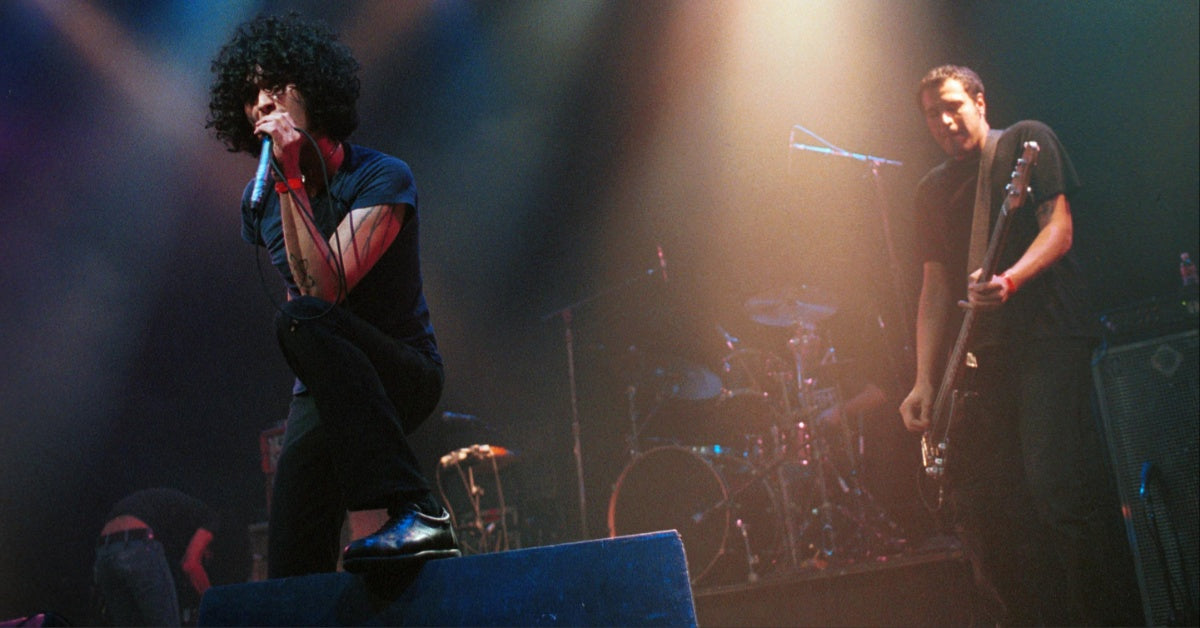
The 2000s were a hotbed for post-hardcore classics, continuing to push the genre in unexpected directions. Compared to its origins in the ’80s, post-hardcore sounded completely different, crossing over with screamo, indie rock, emo, metalcore, and beyond to create a sound ripe for commercial takeoff. Drive-Thru Records played a crucial role in shaping the 2000s post-hardcore boom, signing Senses Fail, the Movielife, and Finch and then sending them off to play Warped Tour. Thursday’s “Understanding In A Car Crash” was added to regular rotation on MTV, introducing many to a sound that carried anguish and intensity in equal measure. Later, their frontman Geoff Rickly met up with My Chemical Romance, hitting it off so much that he produced their first album. It made for a firestorm of events that perfectly suited what people craved — genuine emotional songs played with a harder edge than emo or alt-rock circles.
Read more: 5 most underrated post-hardcore albums of the 2000s
After asking about the genre’s best bands and vocalists, we wanted to dig a little deeper and find out what our readers consider the best 2000s post-hardcore albums. Find the top fan picks ranked below.
5. Finch – What It Is to Burn
Finch weren’t a band for long when they signed to Drive-Thru Records in 2001. However, their rise was well-timed to the moment, finding peers in Something Corporate and the Movielife and hopping on Warped Tour upon releasing their incendiary debut album, What It Is To Burn, the following year. That LP struck a balance between emo’s wounded lyrics, brawny pop-punk melody, and the edgier intensity of post-hardcore. It earned them comparisons to Deftones, Jimmy Eat World, and blink-182, which makes sense upon realizing that its producer Mark Trombino was behind Dude Ranch, Clarity, and Bleed American. The songs lived in between melody and aggression, featuring enough hooks to make it a blueprint album for the genre.
4. Underoath – They’re Only Chasing Safety
When Underoath’s They’re Only Chasing Safety arrived in 2004, it marked a period of reinvention for the Tampa greats. The LP welcomed frontman Spencer Chamberlain, guitarist James Smith, and bassist Grant Brandell into the fold, solidifying their classic lineup. There’s a certain energy permeating the release that feels undeniable, particularly their ability to make the emotional heaviness sound huge and hooky. Aaaron Gillespie’s vocals soar, ushering in a newfound melodicism that Chamberlain juxtaposed with brutal screams. In doing so, they gave post-hardcore a new language, which dozens of bands have referenced since, though Underoath have no interest in retreading the past. As guitarist Tim McTague said in February, “There’s something about that record and that time specifically that will never be recreated. And we don’t want to recreate it.”
3. At The Drive-In – Relationship of Command
In a sense, At The Drive-In’s Relationship of Command marked the beginning of the era’s post-hardcore boom when it hit shelves in 2000. Recorded after touring with Rage Against the Machine, it was their first for a major label, produced by Ross Robinson (who was shifting from working with nü-metal greats to post-hardcore groups, having helmed Glassjaw’s debut LP that same year). It became their breakthrough moment, helping them land their biggest shows yet, like Big Day Out (where the band famously walked offstage after playing three songs due to an unruly crowd) and late-night appearances on Letterman and Conan O’Brien. However, the moment wouldn’t last. At The Drive-In broke up less than a year after the album’s release, walking away at their commercial peak, but there’s not a single band on this list that can discredit their influence.
2. Saosin – Saosin
By the time Saosin released their self-titled debut album in 2006, the post-hardcore scene had already exploded. However, the band didn’t just ride the wave of what had come before — they helped redefine what the genre could sound like with technical precision, adding atmosphere, texture, and melody without ever losing its trademark intensity. The vocals were crystalline, the guitars razor-sharp, the drums purposeful, embracing delays and moody buildups, rather than just breakdown after breakdown. There was also the introduction of Cove Reber, who had big shoes to fill after Anthony Green left to pursue Circa Survive. His departure created a huge void and tension among fans, but Reber shone through, adding more melodicism to the mix.
1. Thursday – Full Collapse
From their New Brunswick house show roots to their major-label breakthrough, Thursday’s fiery, emo-inflected post-hardcore has been influencing dozens of bands since their inception in 1997. Our readers pointed to 2001’s Full Collapse, in particular, as a major moment for 2000s post-hardcore, introducing guitarist Steve Pedulla to the fold and building upon 1999’s Waiting. Like Finch’s What It Is To Burn, Thursday merged multiple elements on Full Collapse — hardcore’s urgency and political leanings, emo’s bleeding-heart confessionalism, and post-hardcore’s dynamic structures. Rickly wasn’t a traditional frontman, either. His voice often cracked or sounded fried, as though he was barely holding it together. It gave Full Collapse a greater depth, sincerity, and realness that many groups have tried to imitate but never matched. Thursday showed that intense, poetically vulnerable music could reach the mainstream, inspiring hundreds of bands, post-hardcore or not, in their wake.