
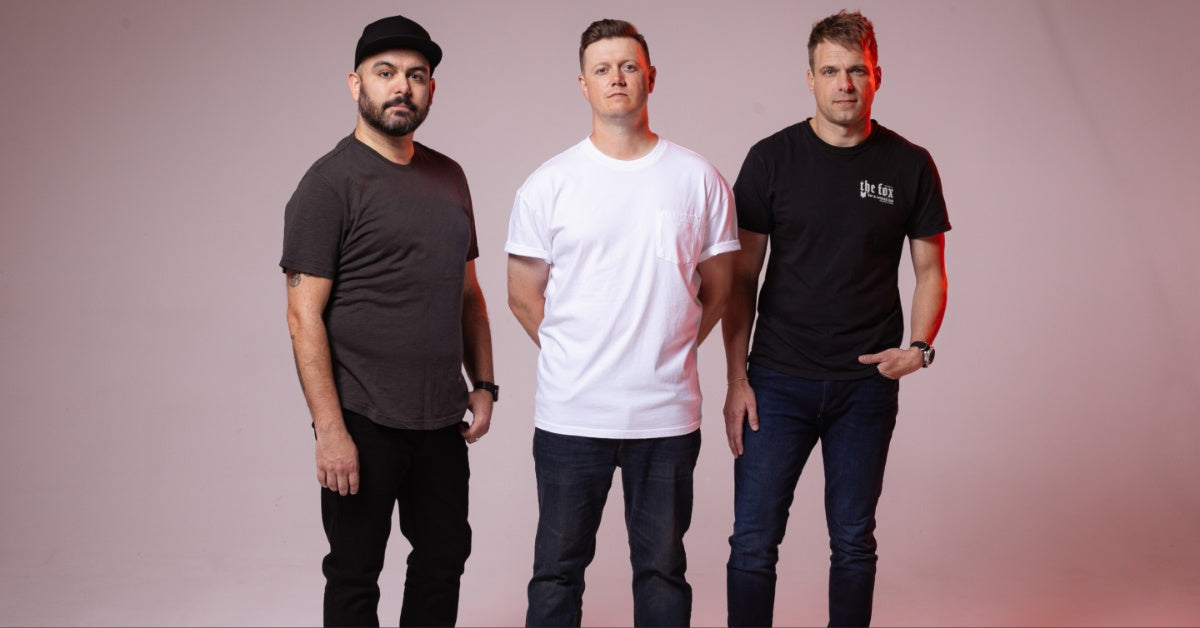
Cartel’s debut, Chroma, hit the scene in 2005, leaving an imprint that permeated the pop-punk genre through its nascent days, making its way from MySpace profile music to classic status carved into the collective memory of Warped Tour vets. This year, the Georgia band’s big break turns 20, which makes the term “vet” hit especially harder, whether we like it or not — and for this anniversary, we are getting more than a straight shot of nostalgia. In September, Cartel will be releasing a rerecorded version of the LP, with special guest vocals by Hey Monday’s Cassadee Pope, and new versions of fan favorites like “Say Anything (Else)” and “Honestly.” Luckily, we won’t have to wait long for a taste of what’s to come, because “Honestly” reimagined drops tomorrow.
To further celebrate the past, present, and future of Chroma, and Cartel — the band will also be hitting the road this fall for a full North American headline tour, launching on the album’s release day in Charlotte and winding through major cities, including Nashville, Brooklyn, Toronto, Chicago, Seattle, San Diego, and Austin — culminating in a hometown finale in Atlanta.
Read more: On the road with Dashboard Confessional
AltPress sat down with Cartel to reflect on Chroma’s legacy, the process of breathing new life into the album, and what fans can expect from this next chapter.
Twenty years later, what’s the first thing that comes to mind when you think of recording Chroma?
Time. We recorded and mixed that record in 21 days, so we worked every day up until late on the last night before hopping on a plane to Los Angeles for mastering. It was a whirlwind, but I think it was for the best, considering we didn’t have time to overthink anything.
Did you have any sense at the time that the album would go on to define an era for so many fans?
We had a sense that we really loved what was happening. Ultimately, we can’t control how our music is received, but there’s a feeling around albums like this one that stands out from the others.
How do you feel when you revisit the album now — as musicians, and as people who lived through that chapter of your lives? What is your relationship, and reaction, to the concept of “nostalgia”?
It’s like a time capsule. Listening to the album brings back so many memories of not only the recording sessions but that period of time in our lives. Nostalgia is a drug that feels really good, but can trap you if you’re not respectful of its lure. It’s fun to revisit the past and pay homage to it. Where we all can get lost in the sauce is when homage turns to blanket deference and we stop working toward the future. For us, this is a really cool moment in the band’s career, as we have an anniversary to celebrate, while simultaneously setting our gaze well into the future.
Do you remember anything that was left on the cutting-room floor, from the Chroma sessions?
We had a demo called “Be Sure” that we all loved, but it wasn’t quite done. That song turned into “This Is Who We Are” on our self-titled album. Otherwise, it was an incredibly intentional record in that sense.
Were there any creative or production choices (or risks) you took on Chroma that paid off in ways you didn’t expect?
Writing, recording, and mixing “A” at the same time is a process that could be recounted in its own article altogether. Mega risky, but holy shit did it turn out all right.
How aware were you at the time of how much the scene was evolving — and where did you see Chroma fitting in — regarding pop punk, emo…
At the time, it was all a blur. We had a certain conviction of what this album should be, and we just plowed forward. I would say that we’ve always let our music be informed and inspired by what’s happening around us, but not directed by it.
How has your relationship with these songs changed over time — especially after performing them for two decades?
It’s funny how the perspective has been so fluid over the years. Sometimes, we really don’t want to play them, and other times, we fall back in love. We’ve also shifted very minor things in the live versions over the years, so the rerecord allowed us to scratch that “itch.”
What about the record resonates differently for you now, with the perspective of age and experience?
There’s so much more hope and resolute momentum in the lyrics than I initially realized. It’s a good kick in the pants for me 20 years later.
How has your dynamic as a band evolved since that first album — personally and creatively? I can only assume that growing up changes things in and out of the studio (or tour bus!)
It’s exactly like any other group of friends that start a band in high school and grow up to tour the world together — super normal. We’ve all expanded our influences and interests over time and have been supportive of each other throughout the process. Creatively, I think there’s a sense of understanding that has come with time and allowed us to move forward in different ways of working together.
What was the atmosphere after it came out? Did you feel pressure, following that debut?
Yeah, I think every band that nails it on the first album spends the rest of their career trying to not let that first foot forward define them forever. It’s a blessing and a curse. Thankfully, I think it’s pushed us to evolve and improve over time, and we’re nowhere close to being done.
What do you think has allowed this album, in particular, to stand the test of time?
Who’s to say? Ultimately, it came from an extremely honest place that’s hard to find sometimes. The perspective granted with time has allowed me to find the roadmap back there, and I’m extremely grateful for this album reminding me of that.
If you could give a word of advice to your 2005 selves — right as Chroma was about to drop — what would you say?
Enjoy every last second of it. Take nothing for granted.
