
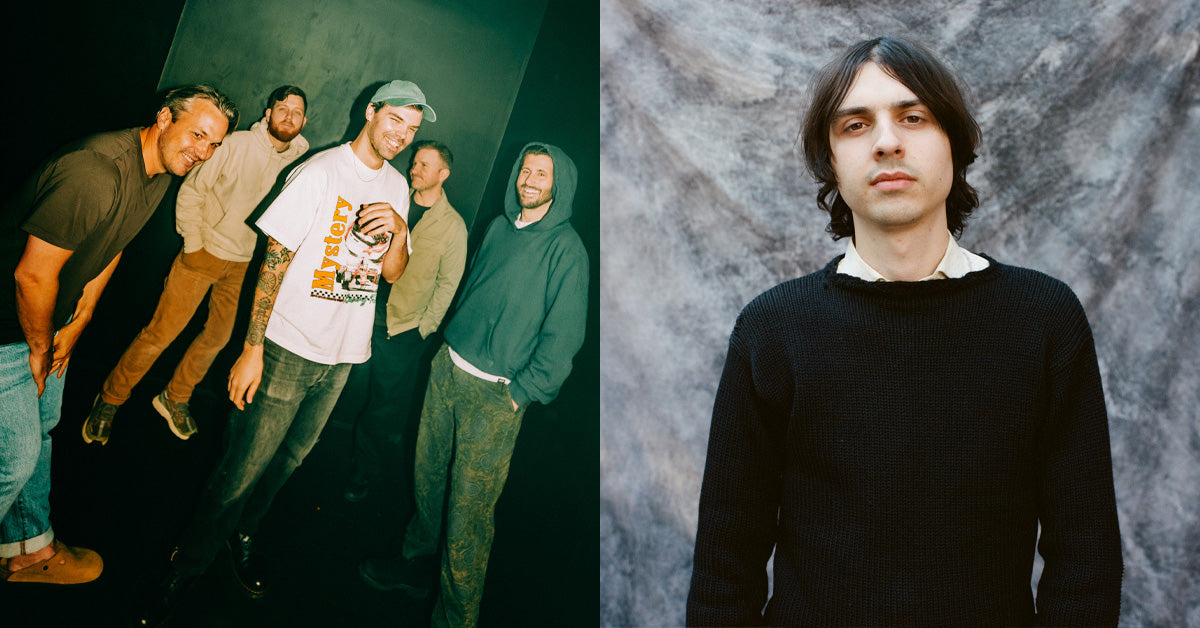
In the alternative music world, the air has been thick with nostalgia as of late. The last couple of years have seen the albums that raised us turning 10, 20, 30. Memory lane is no longer reserved for our parents’ generations, or one of Elton John’s many final tours — festivals like When We Were Young yank at millennial heartstrings, Converse re-released the knee-high sneaker, and it seems that pop-punk’s Punxsutawney Phil has seen his shadow, because the end’s not in sight: In 2025, Warped Tour comes back. Even bands like Linkin Park and Oasis are leaning into the rush of reuniting.
Outside of the mainstream, this pull has permeated parts of the scene as well. Foundational faces of the alt-rock underground and DIY post-hardcore movements are finding their stride once again. Bands like Basement, Pity Sex, and Superheaven have come back together, and so has the beloved Doylestown, Pennsylvania outfit Balance and Composure.
Read more: 10 songs that influenced Foxing’s self-titled album
“We broke up, and then we got back together — same old story,” Balance and Composure’s vocalist Jon Simmons told Alternative Press in July of 2023, just hours before their first New York City reunion show. That night was their debut live performance since B&C’s farewell show and indefinite hiatus in 2019. It felt fresh, triumphant, and emotional without being cloying or stuck in the past — alongside fan favorites, they performed two new songs written with Will Yip (informally dubbed the band’s sixth member) over the previous few months.
Last Thursday, Balance and Composure returned to New York and kicked off their headlining tour at Brooklyn’s Warsaw. On Friday, they dropped their first full-length album in eight years, With You in Spirit, via Memory Music. It’s big and bright, personal and gut-wrenching, drawing on not only the tried-and-true strengths of Balance and Composure but of the “emotional hardcore” genre itself. For returning customers, the project is a powerful and satiating experience — and an enviably toothsome tracklist for new listeners to chew on.

Ashley Gellman
For their first headlining tour back, which is on the road as we speak, B&C brought along longtime friends Kevin Devine & the Goddamn Band, and the young, Los Angeles-based force to be reckoned with, MILLY. Since their 2022 debut, the rising band has been turning heads for their idiosyncratic sound, though at times aspects of their emo-adjacent shoegaze has actually been compared to an early B&C.
Upon a melodic, grungy ’90s foundation, MILLY tell stories of modern-day anxiety and fear, overwhelm and paranoia. With a light touch, and a tangible personal connection to the lyricism, vocalist Brendan Dyer’s kinetic performance recalls that of Ben Gibbard. The results are addictive — a sound, fortified by surging guitars that is both dark and soft, sad and empowering. All of the active ingredients of quality emo music, a genre that newer bands like MILLY are continuing to redefine, expand, and draw on.
While on tour, B&C’s vocalist/guitarist Jon Simmons and MILLY’s Brendan Dyer set aside some time for AP to chat with each other about their most recent projects, what it’s like working with legendary producers, and bond over a shared love of Jimmy Eat World.
JON SIMMONS: I’ve got to know — Brendan, who are your musical fucking heroes? Who are your people? Give me a couple of them.
BRENDAN DYER: Whenever someone asks me this question, I have three touchstones ready. Then I want to ask you the same question! I’d say Pavement, ’90s into ‘00s Jimmy Eat World. And I’ll throw the third out there just for fun, Sunny Day Real Estate.
SIMMONS: Oh, you’re hitting some good ones. I’m a Jimmy-head as well, though. Balance wouldn’t have started without Clarity. I never would’ve tried to make a rock band without that album. You know what I mean?
DYER: I’m not trying to jump ahead, but I was going to say… I listened to a minute of your upcoming [Balance and Composure] album. I feel like certain elements of it reminded me of Futures. Underrated-ass record. Towards the end of it, they do this thing where some of the songs sound like the Cure. I don’t know if the Cure influenced your bands at all, but there’s some of the bass, guitar, and the production had my head go there a little bit.
SIMMONS: They’ve always been an influence. That was the record where I thought outside of the punk world, and I was like, “Oh, you can make really pretty, moving music, too.” It made me want to try a non-punk band. But other music — I like Bon Iver a lot, and I like Frank Ocean a lot. And Nirvana, I would say. Nothing crazy out there, but that’s cool. I can definitely hear Pavement in your influences a bit, but so the new [MILLY] record. How’s it been since it’s been out?
DYER: It’s been good. This is the busiest we’ve ever been, so that says something — and it was the most effort we ever put into anything, I’d say. The whole writing of it and the pre-Pro and all that. I think it paid off. It’s funny in hindsight: We did this project differently than we have in the past. This was actually getting together every week as a band and talking about it and stuff. I feel like it’s paid off, and we love it. And playing the songs live feels really cool. It’s been a good year.
SIMMONS: I can tell you the work you guys put into it, and it’s fantastic. After you release a record, do you get nervous or weary of putting yourself out there too much? Or are you glad to let it go?
DYER: Glad to let it go. In the past, maybe it was a little different. I just felt like by the time this album was coming out and after our whole timeline with it, I was like, “Dude, I can’t wait. I need people to hear this.”
SIMMONS: Yeah, it’s a good feeling. It’s the best. In your bio, I read that y’all got pretty militant about meeting up all the time, really putting a lot of work in. Are y’all a practice at least once a week type band?
DYER: We go through phases, but for that record, it was very much that way. Just we were all [like], “Let’s just not even play shows. Let’s just write an album and see what that feels like.” It’s funny. We teeter between what I’d say we’re almost like slackers or something, but then we also have moments where we’re really focused in. But now, not to segue, but so you guys are separated. You live in different cities. How does that work? Especially for writing songs, were you guys getting together for the new album?

Gilbert Trejo
SIMMONS: Yeah, so it’s a pain in the ass now for sure, because we were militant about practice when we were really active before we broke up for the first time. So we were practicing once or twice every week all the time. We thought that’s what you need to do to make it in the biz. But I moved to LA after we broke up, and then when we decided we wanted to write songs again, I’d have to fly out and stay in Pennsylvania — this is before everybody moved away. They moved away in the middle of recording the record, so it made things interesting. We’d have to just fly out and get together and then practice a bunch. So it’s hectic in that way, scheduling-wise. It’s still one thing I don’t like, but at least I get a chance at all to play with them. But I do wish we got to practice once a week at least, and got to work on our chops, but we’re all in our 30s now and it’s just different. So I like taking what I can get at this point.
DYER: That’s a good perspective. I also feel like there’s, at least from my personal experience with having bi-coastal band members, there is something to be said about when you are together, how special it feels. Not that we take each other for granted, but we rehearse. We go out, and we have all the same friends, which is a totally different great thing. But it’s cool when you’re like, “Ah shit, I’m with my boys. I haven’t seen you.” You get to catch up. That’s fun.
SIMMONS: I love that element, too, so much. Just getting back together in the same room. You’re like, “Oh, it’s a family reunion, and it’s sick.” It’s just a great feeling. I completely agree with you. I love that.
DYER: Where did you record the new album, and did you work with a producer?
SIMMONS: Yeah, we recorded it at Studio 4 in Pennsylvania with Will Yip, who worked on our last three records. But it had been eight years into our last record, so we were blown away at how much he’s grown as an engineer and producer.
He’s on another level now. I’m just proud of him. So that was really what was so cool about it. But it’s also easy. He’s like our sixth member of the band, so we tried to make it as easy and chill and fun as possible this time around. You recorded with Sonny DiPerri, right? Who worked with fucking Nine Inch Nails. Dude, how was that? Because the record sounds amazing. I really, really love how it sounds. How was that experience and how was it different than recording before? Did you learn anything? Did he push you?
DYER: Yeah, it was night and day. We used to do everything with this dude named Corey Coffman, who’s out of Colorado, and we had a great time working with him. He really was a very early MILLY believer. We’d bounce ideas off each other. Great dude. But his approach was a little different than I think what we figured would make sense for the record that we were trying to record. I don’t know how y’all did it, but we’ve always been a band that records piece by piece to the click and whatever. But with this album, a touchstone was Nirvana’s Nevermind — not sonically, but the work ethic of we’re a three-piece band, we’re going to get in a room, and we’re just going to play live and then just overdub. We recorded the whole album live, and then the overdubs, a click in your ear or whatever, or a drummer did. He learned that trick where you weave in and out of the click to your need. I’m not that technical, but he was really good at that, and we’d rehearse with him doing that. But I guess to wrap that up, Sonny was a friend before recording us. He recorded other bands that we’re friends with, and we’d see him around town. So we started meeting up with him just to hang out, and then it eventually moved into a relationship. We’re like, “Hey, we should just do a fucking record together.” He definitely pushed the fuck out of us in a way that I needed.
SIMMONS: One of the best ways to get tight as a band is to record to tape.
DYER: Never done that actually. But is that what you guys did? We recorded live.
SIMMONS: I guess it’s the same thing. You are still recording live, but our drummer and bassist recorded to tape live, so we kept those, and then we did guitars through computer and shit. It’s a good way to get tight.
DYER: Right. A lot on the line maybe?
SIMMONS: Tape’s expensive, too, so you can’t really fuck up or you’re in trouble. I would love to see how Sonny works.
DYER: Dude, I love so many of Will’s records. I only just heard the record today, but I was listening to the singles as they were coming out, and it’s just so tasteful. I hope this is what you’re going for, but I think you could put it on for anybody, and they’d get it, which is really nice. I’ve always wanted that with MILLY, too, where I’m like, “I want to make music for us, first and foremost.” But of course, I don’t want to be a niche rock band. I just want to make music that anyone can listen to. It doesn’t matter where they’re coming from — there’s just songs there.
SIMMONS: Yeah, just making good songs is really the point. Yes, I feel you. You know what I love? Well, you have a great voice. I love your voice, but I really like your sense of melody. Your record is, I think, catchy. Every song is really catchy and just the perfect, simple melody. You keep it so locked in. I love it. I admire it a lot, so I am excited to see it every night on this tour coming up.
DYER: That means a lot. I was going to say, I’m ready to see how the songs on your record translate in a live setting.
SIMMONS: Me too. I’m scared. We just got together last week to start practicing them. We haven’t played them.
DYER: I was going to ask if you’ve been rehearsing.
SIMMONS: Just all the past week. So we got ’em locked in now. It’s still just scary playing new songs, but also the most exciting part of going on tour.
DYER: I know. I see people on Twitter. They’re excited.
SIMMONS: On Twitter. They’re jazzed on Instagram. They’re haters. Just kidding, guys.
DYER: Dude, fuck Instagram. I’m over that shit.

Gilbert Trejo
SIMMONS: I’m kidding. Everyone’s been super cool about it. What was the hardest part of making this record? Is there a part of it that was really challenging for you? Also, what part are you most proud of?
DYER: I think the hardest part was there were four songs by the time we got to doing vocals that still needed something. So it was a lot of me sitting with an acoustic guitar. Sonny and I’d play the verse, and then we’d talk about it. Then get the Voice Memo of that, and then going outside and listening to the little nonsensical things and then putting words to it that make sense with whatever the theme of the song was.
SIMMONS: That’s always tough. I know that game very, very well.
DYER: Yeah. But dude, doesn’t it feel so damn good when it works out?
SIMMONS: Yeah, big time. That’s what it’s all about, cracking the code. That is one of my favorite feelings as a human being.
DYER: Yes.
SIMMONS: Love to crack a code. I feel like with our record, the most challenging thing for me was myself. I look back on old records of ours, and I’m always like, “Oh, I could have done that better. That verse, melody sucks. It could have been better.” With this one, I refused to have any to my standards, anything mediocre. So I would spend countless nights, even if a song was finished, listening to the instrumental. I didn’t just rewrite the whole thing and new melody parts. So really, I made options. Some verses I would be like, “Here’s an option, guys. Do you like this better, or do you like this better with different lyrics?” I just wanted to make sure everyone liked everything, and especially for myself.
DYER: That’s really cool. That’s something I might steal from you. I’m such a Pavement super fan, but I know Steven Malus does that for sure. There’s a lot of that — there’s a clip in one of their documentaries where he’s reading out of his journal lyrics. But anyway, it’s cool. I think that’s really sick. How much do you feel like you bounce lyrics and themes off the other guys? Because in my band, I’m like, “Yo, we can talk about melody. We can talk about anything, but lyrics, that’s personal,” and they don’t ever really step in in that way. But some bands do.
SIMMONS: I don’t ask for input from them for lyrics. Melodies, for sure. Lyrics are just my lane and your lane. Step off that. That’s what I say. That’s my thing.
DYER: Yeah. I’m speaking for all you guys.
SIMMONS: Let me cook. What’s your favorite song on your new record?
DYER: Probably “Past the Glow.”
SIMMONS: I’m trying to remember how it goes. Sing it for me. No, I’m just kidding. I really liked “Nothing To Learn From.” I love that last one.
DYER: We’ll be playing that shit out there. These are absolutely, without a doubt, the biggest shows that we will have ever played to date. So shouts out to you. Thank you for taking us out, dude.