
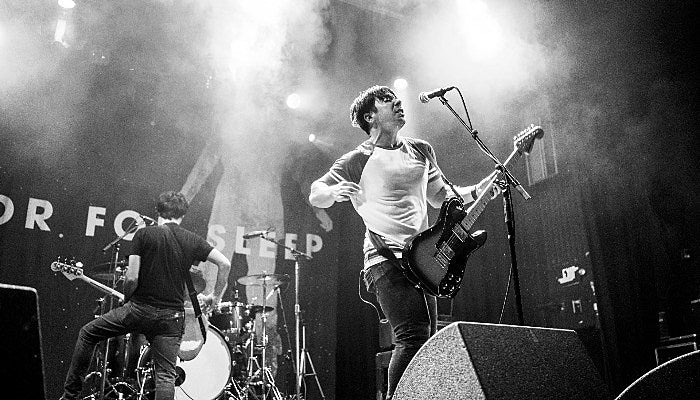
Fall 2021 has proven to be an exciting time for music fans and bands alike. Following the massive touring delays caused by the ongoing COVID-19 pandemic, it’s finally feeling like we are getting some relief when it comes to live music. Many of our favorite artists are beginning to fill rooms (safely) and reschedule their long-awaited tours, and while the future is uncertain, it’s at least a faint glimpse of the normalcy we all crave.
Read more: Nirvana’s 1992 cover captures a band breaking into the mainstream
One of the many tours that was sadly postponed due to the pandemic was Armor For Sleep’s What To Do When You Are Dead 15-year anniversary tour. Thankfully, the band have been able to make their triumphant return this year, much to the delight of their die-hard fanbase and for the band themselves. The concerts mark the first time the band have played onstage since 2015, part of their last reunion run.

We had the pleasure of attending the band’s show last weekend at the famous Los Angeles venue The El Rey Theater, where the band performed their acclaimed sophomore record in its entirety, which features fan-favorite “Car Underwater,” along with an encore of greatest hits from their small but powerful three-record discography. A standout moment from the band’s encore was a stripped-down acoustic performance of their 2007 single “End Of The World,” featured on the soundtrack for the first Transformers film. Though the song’s meaning is actually metaphorical, according to the band, the imagery and subject matter couldn’t have felt anymore relevant and important in a post-pandemic world.
Read more: KennyHoopla is redefining what it means to be a rockstar for a new era

The show closed with an emotional performance of the first song the band ever wrote, the title track of their equally influential 2003 record Dream To Make Believe. Jorgensen ditched his guitar to jump toward the crowd to sing the iconic refrain “Let me sleep some more” as piles of die-hard fans screamed along in perfect unison.
Following the band’s performance, we had the pleasure to chat with singer-guitarist Jorgensen to discuss the band’s return to the stage for their nationwide anniversary tour after a series of delays, their formation in the New Jersey emo and hardcore scene of the late ‘90s/early 2000s, along with his favorite songs from their career, the possibility of a new record and much more.
How has the tour been so far? Especially playing these larger rooms and not taking the stage since your last reunion tour in 2015. What has the dynamic been like after so much time away?
Well, it’s a very interesting twofold thing that we are getting to experience now for us on tour. The first component is that this tour was supposed to happen a year-and-a-half ago. We actually announced the original dates of the shows right before the first lockdowns went into place. With us getting to play shows again, for the first time since 2015, there was everything that comes with that and so many questions like,”What are our fans going to want? Are there fans left, and are people going to be excited to be at these shows?”

As far as the dynamic within the band after so much time away, it really has still felt so embedded within me no matter what. It’s still all that I dream about. We have been through so much. Getting back onstage helps me tap back into who I am. It almost feels like these songs have just been waiting in my brain to be tapped into again. There’s just certain things that feel right to do again.
Why do you think What To Do When You Are Dead has resonated so strongly with your fanbase out of all of your records—and after so many years?
When we put the record out 16 years ago, the scene was full of so much creativity, and it shuffled into everything. I was pretty young, and I honestly didn’t think anyone was listening, literally [or] figuratively. We were at a weird point in the band, so I kjust did what felt real to me at the time. Over the years, when I talk to people about the record, it’s apparent the subject matter has tapped into things that people coincidentally thought about [in] the same way as me. I think the record touched on topics that other people were going through in their experience as human beings.

I thought it was awesome that you decided to play a stripped-down version of your 2007 single “End Of The World.” Considering the times we are living in, was this intentional?
Yeah, we thought it was a little bit of the times, I guess. It’s actually about a completely personal thing where I was making some far-fetched metaphors that, in retrospect, was probably too big of a reach. I feel like the literal interpretation is now more relevant. In all honesty, I think I have always been into end of the world fiction like The Walking Dead or Stephen King’s The Stand. However, I feel like COVID sucks a lot more than the fictionalized versions of horrible global events, so I guess I was a little bit hesitant to not come off like I’m glorifying it in any way. It was more of a “wink” moment. I do remember teasing fanswhen the lockdowns first started by [posting] the intro to the song on my Instagram story. [Laughs.]
In the span of only four to five years, you put out three full-lengths in your relatively short time as a band. If you had to choose a favorite song from your discography, what would it be?
I remember writing “Dream To Make Believe” when I was a senior in high school. I recorded that and “Slip Like Space” as the first two-song demo when I was a bummed-out 17-year-old kid between high school and college. I had zero business savvy or drive to have a successful band, but I really liked those songs and just wanted to see them come to life. Especially the song “Dream To Make Believe,” it took me on the path to make the record of the same name, and I just feel like I will always love that song because without it, I don’t know where we would be.

You came up in the New Jersey emo and hardcore scene, alongside bands like Thursday, Senses Fail and the Early November. For some reason, this region in particular had something truly unique behind it musically. What was in the water in New Jersey that caused so many amazing bands to form?
I’ve been thinking about this for a lot of years actually. It’s a multifaceted answer. For one, northern New Jersey is so close to New York, while southern New Jersey is close to Philadelphia. These are huge cities, but for us kids in the suburbs, we were able to have the luxury of having garages that our parents let us practice in, which I think in those bigger cities, you do not always have. Particularly in New Brunswick, it was a college town home to Rutgers University, which had a lot of college kids making noise in basements.
I think every kid in my age group just got so excited about the fact that other kids were throwing shows in VFW halls, basements and churches. Maybe it was because we had access to these DIY spaces that made it so special. I don’t think I even stepped foot in a proper club until I had already been playing shows on tour. Every weekend, we would just put on shows for each other, where you could just pay an old guy playing dominoes in the back of an [American] Legion hall a hundred bucks to rent the space as long as you could bring speakers and instruments.
You were actually on the cover of AP in 2006 for the annual Warped Tour issue alongside the Academy Is…, Motion City Soundtrack and From First To Last. What do you remember from this shoot and Warped in general?
That was when we were in the thick of things. I actually had a subscription to AP, and it was a huge part of my life, so every time we were featured, it was always the best thing in the world. We were so stoked to have so many other friends who were part of that world join us on the cover. It’s funny: We actually shared a bus with From First To Last on Warped Tour ‘06. Their singer Sonny Moore [now best known as Skrillex] was like 16 years old, and I remember thinking that was so crazy.

Clearly, the chemistry within the band has never been stronger, and there is a huge demand from your fans for new music. In that case, can we expect any new material in the future?
I would say that since we got together for this tour, it definitely woke the band up in a way, so I guess it wouldn’t be so crazy to think about new music in the future. I think I realized something that I probably should have realized a long time ago. In terms of creating and writing, if we are thinking about what other people will think of our music, then it’s not going to be good. If we were to do new music, it would have to be something that we think will be cool in the world on its own, with no other outside influence and no other expectations. I won’t care if it doesn’t perform well or whatever. I just want to put out into the world something that could affect somebody somehow. That’s usually when we succeeded the most, when we had that mentality.